In a previous post, I asked that we take caution how we communicate a certain risk. That example talked about the location of the "Valley Fault System," previously called the Marikina Fault, which obviously presents a certain disaster risk. One problem was that risk wasn't quantified then -- how close should one be to the fault lines to be at risk? It wasn't very clear, but people could readily assume that if they are clearly not along the fault lines, they should be safe. If they're not sure, they should consult PHIVOLCS (not PHILVOLCS, by the way), who can provide information on distance of a certain property from the nearest fault line.

civil, structural, typhoon, wind, earthquake, and structural dynamics engineering
Showing posts with label ethics. Show all posts
Showing posts with label ethics. Show all posts


20131228
Your house is not along the faultline. What now?
 |
| [Image from tulisanes.wordpress.com] |
http://tulisanes.wordpress.com/2012/04/03/is-your-house-standing-on-an-earthquake-faultlineObviously, the author has good intentions, although he is seemingly not an engineer (or maybe still a young engineer?). The impression I'm getting though is that the article is suggesting to check whether your house/property is along one of the published faultlines. If it is, you're obviously in danger. But it might also give the impression that if you are a good distance away, you probably shouldn't worry.
20130410
Not the smartest thing I've heard from a relatively very senior structural engineer... [UPDATED]
Talking to a group of wind engineers, a structural engineer with years of experience in structural design said:
---
* Note: This is not a verbatim quote.
"Can't you people reduce the wind loads? TheI've said it before, but I'll say it again: experience does not equal expertise.columns oncore walls in our 400-meter tall or higher buildings are 1.5 meters thickwide. These are too big."*
---
* Note: This is not a verbatim quote.
20130112
A tragic event due to faulty construction?
Check out the video on this link: http://www.facebook.com/photo.php?v=1817415148842. (Thanks to my friend VIR for sharing the link.) The tragedy is not even due to an earthquake, other natural disasters, nor even a terrorist attack.
My friend ponders, is it the designer's or the contractor's fault?
My friend ponders, is it the designer's or the contractor's fault?
20121117
An engineer's dilemma. Any thoughts?
A contact on Facebook posts photos of his "dream home," located in earthquake-prone Philippines. Problem is, it's all concrete hollow block (CHB / CMU / concrete masonry unit) walls. Filled and reinforced, I'm sure. But, no reinforced concrete columns? Based on what I know, this kind of construction is not safe at all, specially in earthquake-prone countries. Or even if it had (and it didn't) have reinforced concrete columns, they still require proper seismic design. These all-masonry wall systems are just bound to collapse when the next big one happens. What do I do? Do I become the bearer of bad news? Do I give unsolicited advice? The problem also is that who knows when the next big one will happen, right? If nothing big occurs during our lifetime, then, well it would seem I am wrong, after all, no? What to do, what to do.
Please share your thoughts in the comments.
Please share your thoughts in the comments.
20120918
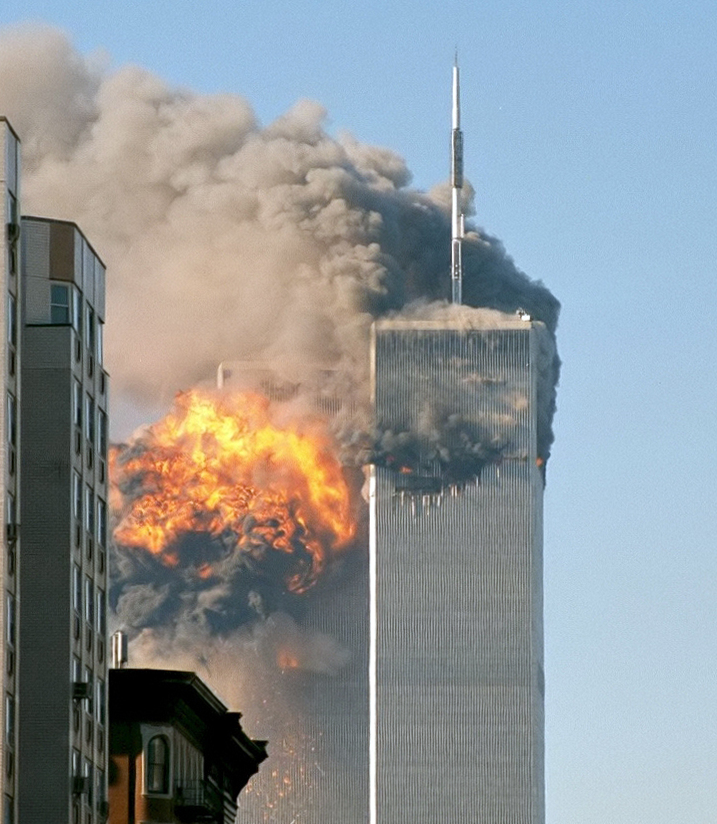
"High-rise" and "tall" buildings, and the 10 worst collapses in history
 |
| Image from Wikipedia |
Anyway, check out this list on bestonlineengineeringdegree.com of the 10 worst high-rise building collapses in history. If in case the link stops working, you can try this Google-cached copy of the webpage:
20120818
What is structural design?
 |
| The Moriyama House, Tokyo. One of the projects of Structured Environment. Image from Danda. |
20100809
Reply to a reader question on engineering design practices in the Philippines
The comment went as follows:
Hi, I am a "young" engineer practicing structural engineering.
20100720
What is Engineering? + New Engg.RONJIE.COM Look
If this isn't your first time here (http://ronjie-engg.blogspot.com/), you would have noticed the new look of this website that is all about engineering, from the RONJIE.COM perspective. What is Engineering?
20100421
Code of Ethics for Civil Engineers
Taken from the PICE website on 23 March 2010.
Fundamental Principles
Civil engineers uphold and advance the integrity, honor and dignity of the civil engineering profession by:
Fundamental Principles
Civil engineers uphold and advance the integrity, honor and dignity of the civil engineering profession by:
20100414
Code of Ethics for Structural Engineers
Taken from the ASEP website on 23 March 2010.
It shall be considered unprofessional and inconsistent with honorable and dignified bearing for any members of the Association of Structural Engineers of the Philippines:
It shall be considered unprofessional and inconsistent with honorable and dignified bearing for any members of the Association of Structural Engineers of the Philippines:
20100331
Designing for near-field earthquakes, using the NSCP 2001
If you are familiar with the NSCP 2001 earthquake loading provisions (ELPs), you know it is based on UBC 1997. Some people think it is "copied" from UBC 1997, but copied "poorly." It is not copied! It is based on UBC 1997 but it had to be suited to "local" conditions.
Anyway some of the features of the NSCP 2001 ELPs that are in contrast with similar ones in the UBC 1997 are as follows:
Anyway some of the features of the NSCP 2001 ELPs that are in contrast with similar ones in the UBC 1997
are as follows:
Subscribe to:
Posts (Atom)