In a previous post, I asked that we take caution how we communicate a certain risk. That example talked about the location of the "Valley Fault System," previously called the Marikina Fault, which obviously presents a certain disaster risk. One problem was that risk wasn't quantified then -- how close should one be to the fault lines to be at risk? It wasn't very clear, but people could readily assume that if they are clearly not along the fault lines, they should be safe. If they're not sure, they should consult PHIVOLCS (not PHILVOLCS, by the way), who can provide information on distance of a certain property from the nearest fault line.

civil, structural, typhoon, wind, earthquake, and structural dynamics engineering
Showing posts with label engineering misconceptions. Show all posts
Showing posts with label engineering misconceptions. Show all posts


20140314
Metrology is not the same as meteorology #didyouknow
I know that the word "meteorology" is difficult to pronounce and sometimes even spell. But some, whether unintentional or otherwise, pronounce it like "metrology," or its descriptive form "meteorological" as "metrological." It might be all right, because not so many people know about metrology, and even some spell checkers think it is a misspelling. But in fact, this is how it is defined:
20140213
Damping in buildings for wind-resistant design based on a stick-slip model
I am posting a download link to a copy of my dissertation here for those of you who are interested.
Title:
DAMPING IN BUILDINGS FOR WIND-RESISTANT DESIGN BASED ON A STICK-SLIP MODEL
Title:
DAMPING IN BUILDINGS FOR WIND-RESISTANT DESIGN BASED ON A STICK-SLIP MODEL
Abstract:
Damping is said to be one of the most important parameters in the wind-resistant structural design of buildings. But, damping is also known to have high uncertainty, which leads to low reliability in the design. Current estimation formulas and early research on structural damping, particularly, are associated with stick-slip mechanism. But these current models have only shown this qualitatively. In the end, these models fitted formulas to databases of full-scale experimental data. This dissertation therefore aims to quantitatively study the stick-slip mechanism itself to derive a theoretical expression, and finally, to apply the derivation to actual physical structure data to illustrate that stick-slip damping is indeed a valid model. The study starts from a very simple one-degree-of-freedom (1DOF) system with one stick-slip component (1SSC), to a more complicated 1DOF system with a large number of SSC (NSSC). The study also briefly touches on the damping of SSC inside MDOF systems. The study of MDOF with NSSC systems is necessary because actual physical structures are such.
20131228
Your house is not along the faultline. What now?
 |
| [Image from tulisanes.wordpress.com] |
http://tulisanes.wordpress.com/2012/04/03/is-your-house-standing-on-an-earthquake-faultlineObviously, the author has good intentions, although he is seemingly not an engineer (or maybe still a young engineer?). The impression I'm getting though is that the article is suggesting to check whether your house/property is along one of the published faultlines. If it is, you're obviously in danger. But it might also give the impression that if you are a good distance away, you probably shouldn't worry.
20131127
In the eye of Super Typhoon Yolanda
Well, not exactly. But pretty close -- this is a 12-minute compilation of videos taken by the folks at iCyclone.com of STY Yolanda's fury right in Tacloban City.
WARNING: You are risking your life when you try to do this. Technically, the city should have been evacuated already. When authorities (e.g. PAGASA) warn of an impending storm, follow their instructions! You might say that they been "wrong" before... But it's because this is nature we're talking about. No one can very accurately predict nature. We can only prepare for the worst.
WARNING: You are risking your life when you try to do this. Technically, the city should have been evacuated already. When authorities (e.g. PAGASA) warn of an impending storm, follow their instructions! You might say that they been "wrong" before... But it's because this is nature we're talking about. No one can very accurately predict nature. We can only prepare for the worst.
20131117
Do we need to increase the code-required minimum design wind speed now after Yolanda?
The answer to this question is NO, there is no need to provide NEW wind load code requirements for higher wind speeds.
20130907
Presentation in front of ~2,000(?) Civil Engineering Undergrads at the 2013 National CE Symposium
The event was held on September 6, 2013 at the University Theater, University of the Philippines, Diliman, Quezon City, and organized by the UP Association of Civil Engineering Students. I introduced the many different facets of wind engineering to these civil engineering undergrads from around the country. I think I did okay. :-)
20130613
Response to a Reader Question... from 2007! About Billboards.
The e-mailer asked:
I was wondering if we could discuss billboards of the flexible type? I am a BS Geography student finishing my thesis right now and trying to find resource persons or key informants.
My thesis is about the hazards the billboards pose to human life and property. In line with my recommendations part, I wanted to seek alternatives on billboards, if not alternatives for the laws for it. Since I see that billboards can not really be wiped out, due to its economic contributions to the LGU or National government, your concepts are deemed vital.
The initial plan I have in mind is to interview you RE solutions we could make if and when billboards can not be banned totally.
Billboards proved to be something that can affect adversely the lives and properties of people. As a social scientist, I saw it very interesting to tackle but not really focus on the technical aspects of it. Flexibility is understood as a solution to the social problem.I replied:
20130410
Not the smartest thing I've heard from a relatively very senior structural engineer... [UPDATED]
Talking to a group of wind engineers, a structural engineer with years of experience in structural design said:
---
* Note: This is not a verbatim quote.
"Can't you people reduce the wind loads? TheI've said it before, but I'll say it again: experience does not equal expertise.columns oncore walls in our 400-meter tall or higher buildings are 1.5 meters thickwide. These are too big."*
---
* Note: This is not a verbatim quote.
20130217
How do we get "Site-Specific Wind Loads" in the Philippines?
I was asked this question, and here is how I would answer it.
In the structural engineering community especially in my home country, the interest and knowledge in earthquake engineering and earthquake-resistant design has grown rapidly over the past two decades especially after the 1990 Luzon Earthquake. Some of the recent "buzz words," if I may use that term, in the community are "site-specific seismic hazard assessment," and "performance-based seismic design."
In the structural engineering community especially in my home country, the interest and knowledge in earthquake engineering and earthquake-resistant design has grown rapidly over the past two decades especially after the 1990 Luzon Earthquake. Some of the recent "buzz words," if I may use that term, in the community are "site-specific seismic hazard assessment," and "performance-based seismic design."
20130112
A tragic event due to faulty construction?
Check out the video on this link: http://www.facebook.com/photo.php?v=1817415148842. (Thanks to my friend VIR for sharing the link.) The tragedy is not even due to an earthquake, other natural disasters, nor even a terrorist attack.
My friend ponders, is it the designer's or the contractor's fault?
My friend ponders, is it the designer's or the contractor's fault?
20120918
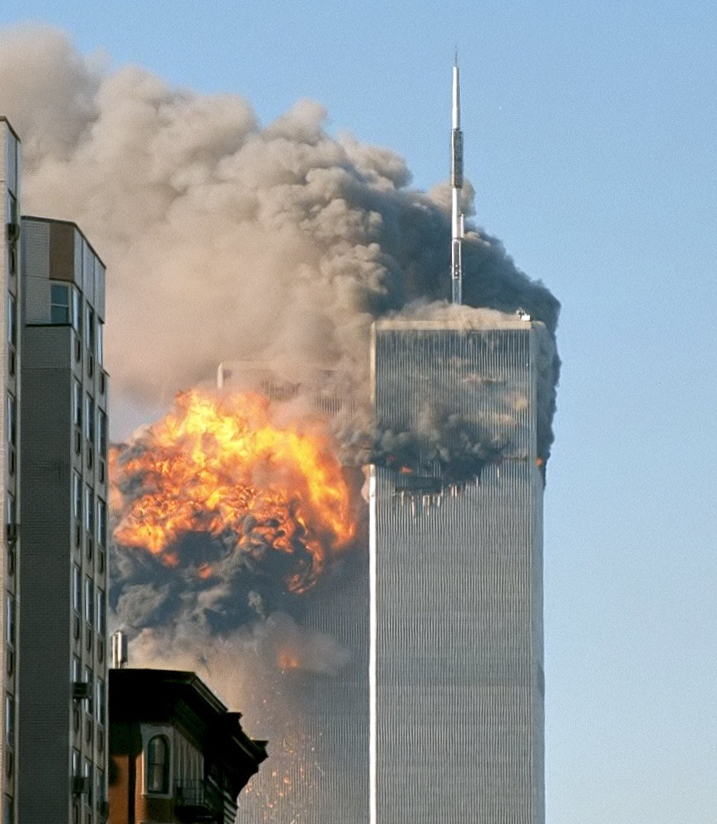
"High-rise" and "tall" buildings, and the 10 worst collapses in history
 |
| Image from Wikipedia |
Anyway, check out this list on bestonlineengineeringdegree.com of the 10 worst high-rise building collapses in history. If in case the link stops working, you can try this Google-cached copy of the webpage:
20120818
What is structural design?
 |
| The Moriyama House, Tokyo. One of the projects of Structured Environment. Image from Danda. |
20120423
"Engineers are cool"
20110908
Malaya: Interview of RWDI Rep on Wind Engineering
Yes. Wind engineering is still mostly unknown in the Philippines. There is practically no one Filipino in the Philippines who is actually into wind engineering.
Consider this one thing that wind engineering is for: to minimize and possibly prevent typhoon-induced damages.
Very relevant to us in the Philippines, right?
Consider this one thing that wind engineering is for: to minimize and possibly prevent typhoon-induced damages.
Very relevant to us in the Philippines, right?
20110903
Engadget: Detroit DIYer cooks up stronger, lighter steel, shames scientists
Read this (rather old) article on Engadget. What's your first impression, fellow civil/structural engineer?
Here's the thing. In structural design, we want the steel to be ductile, not brittle. In the steel we know of and have been using, usually stronger means more brittle. That's more dangerous to use in design.
So that is one question left unanswered by this discovery. Is it steel we can actually use in civil/structural design in place of the current types of steel we commonly use? i.e. does it have sufficient ductility? Granted, it's not to say it doesn't have any use at all.
Ars Technica: Irene's path illustrates the challenges of hurricane forecasting
Read this article on Ars Technica. It's yet another piece on why I think we Filipinos are expecting too much from PAGASA. Here, the troubles of the US equivalent are illustrated vis-a-vis the most recent hurricane to threaten highly populated New York and other east coast cities. The key point is that there are things we can predict about typhoons and there are things we can't. I think what's happening is since we can predict some things, there's an expectation that everything about it can be predicted. It's like, since we know a basketball game is going to end up with scores above 100, the expectation is we can predict exactly what the score will be. 111-109? 103-102? Big NO.
Read up, ladies and gentlemen. Before ye speak ill. :-D
20110814
Yet Another Wind Disaster
First, take a look at this video: Indiana Stage Collapse: Why Was Warning So Late?
20110606
A curious application for wind engineering
Wind engineering deals with the interaction of wind and the built environment. So usually, wind engineers would determine wind loads and appropriately design houses, tall buildings, bridges, wind turbines, and so on. As you all might agree, those are important stuff that warrant careful design.
20110429
Japan, tsunamis, Katrina, and other natural hazards
I haven't blogged in a long time, and yes, although we were probably 300 km away from the earthquake, tsunami, and nuclear triple disaster this past March, that event was one reason. But the truth is I mostly got really busy with my work. Now I just wanted to share second-hand information from a Japanese, about Japan and its battle against earthquakes and tsunamis, and to talk about the similarities with New Orleans and Hurricane Katrina.
Subscribe to:
Posts (Atom)