Quora's bots asked me to answer the above question, and below is my response. What do you think of my response? Did it answer the question? Is there anything incorrect with what I said? How would you have answered the question? Let me know in the comments.
"What is 'spectral acceleration' in structural analysis?"

civil, structural, typhoon, wind, earthquake, and structural dynamics engineering
Showing posts with label earthquake engineering. Show all posts
Showing posts with label earthquake engineering. Show all posts
20180212


20131228
Your house is not along the faultline. What now?
 |
| [Image from tulisanes.wordpress.com] |
http://tulisanes.wordpress.com/2012/04/03/is-your-house-standing-on-an-earthquake-faultlineObviously, the author has good intentions, although he is seemingly not an engineer (or maybe still a young engineer?). The impression I'm getting though is that the article is suggesting to check whether your house/property is along one of the published faultlines. If it is, you're obviously in danger. But it might also give the impression that if you are a good distance away, you probably shouldn't worry.
20130913
Presentation at the 2013 ASEP Wind and Earthquake Engineering Seminar, Cagayan de Oro City
The 2013 ASEP Wind and Earthquake Engineering Seminar was held on August 16 to 17, 2013 in Cagayan de Oro City.
20130716
Demonstration of base-isolated versus conventional building under "earthquake" / ground motion #video
Nice visualization/demonstration.
20130702
Presentation at 2013 PICE National Midyear Convention
On June 28, 2013, I went to Subic Bay to present a paper entitled "How to estimate 'site-specific wind loads?'" at the 2013 National Midyear Convention of the Philippine Institute of Civil Engineers. It is essentially a more formal paper version of an article I posted here on this blog earlier. The full video of the presentation is below. (Note: The slides are in English but the presentation itself is in Filipino.)
20130311
6.5 hours of videos during the Great East Japan Earthquake of March 11, 2011
Check 'em all out at this website:
http://ronjie-raw.blogspot.com/2013/03/65-hours-of-videos-from-great-east.html
Our hearts and prayers go out to all those affected, especially those who are, to this day, still suffering due to this tragic event.
http://ronjie-raw.blogspot.com/2013/03/65-hours-of-videos-from-great-east.html
Our hearts and prayers go out to all those affected, especially those who are, to this day, still suffering due to this tragic event.
20130217
How do we get "Site-Specific Wind Loads" in the Philippines?
I was asked this question, and here is how I would answer it.
In the structural engineering community especially in my home country, the interest and knowledge in earthquake engineering and earthquake-resistant design has grown rapidly over the past two decades especially after the 1990 Luzon Earthquake. Some of the recent "buzz words," if I may use that term, in the community are "site-specific seismic hazard assessment," and "performance-based seismic design."
In the structural engineering community especially in my home country, the interest and knowledge in earthquake engineering and earthquake-resistant design has grown rapidly over the past two decades especially after the 1990 Luzon Earthquake. Some of the recent "buzz words," if I may use that term, in the community are "site-specific seismic hazard assessment," and "performance-based seismic design."
20121117
An engineer's dilemma. Any thoughts?
A contact on Facebook posts photos of his "dream home," located in earthquake-prone Philippines. Problem is, it's all concrete hollow block (CHB / CMU / concrete masonry unit) walls. Filled and reinforced, I'm sure. But, no reinforced concrete columns? Based on what I know, this kind of construction is not safe at all, specially in earthquake-prone countries. Or even if it had (and it didn't) have reinforced concrete columns, they still require proper seismic design. These all-masonry wall systems are just bound to collapse when the next big one happens. What do I do? Do I become the bearer of bad news? Do I give unsolicited advice? The problem also is that who knows when the next big one will happen, right? If nothing big occurs during our lifetime, then, well it would seem I am wrong, after all, no? What to do, what to do.
Please share your thoughts in the comments.
Please share your thoughts in the comments.
20120918
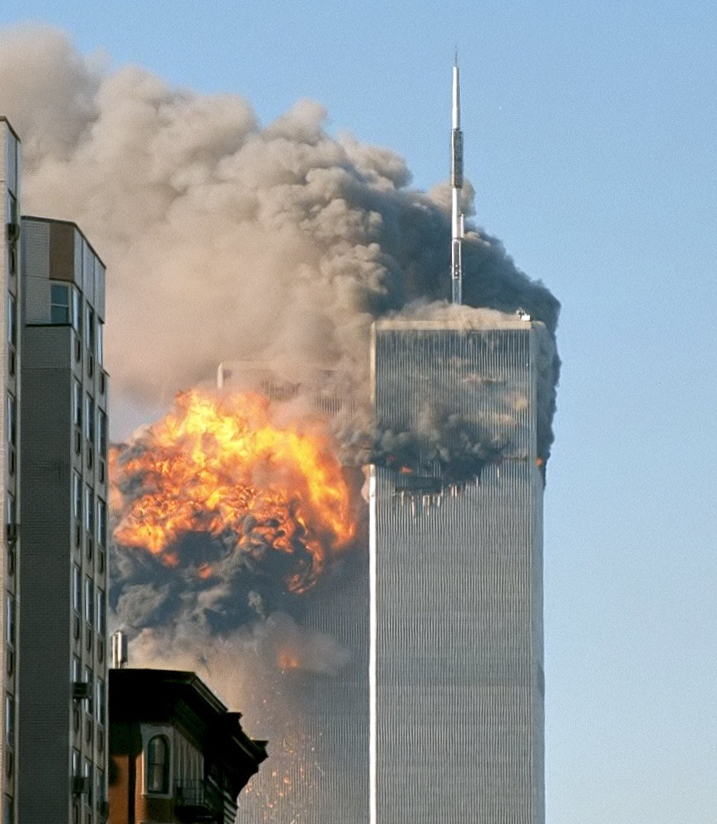
"High-rise" and "tall" buildings, and the 10 worst collapses in history
 |
| Image from Wikipedia |
Anyway, check out this list on bestonlineengineeringdegree.com of the 10 worst high-rise building collapses in history. If in case the link stops working, you can try this Google-cached copy of the webpage:
20120818
What is structural design?
 |
| The Moriyama House, Tokyo. One of the projects of Structured Environment. Image from Danda. |
20111205
10 FAQs on earthquake safety of buildings in the Philippines
 |
| DoubleBlade |
20110429
Japan, tsunamis, Katrina, and other natural hazards
I haven't blogged in a long time, and yes, although we were probably 300 km away from the earthquake, tsunami, and nuclear triple disaster this past March, that event was one reason. But the truth is I mostly got really busy with my work. Now I just wanted to share second-hand information from a Japanese, about Japan and its battle against earthquakes and tsunamis, and to talk about the similarities with New Orleans and Hurricane Katrina.
20100809
Reply to a reader question on engineering design practices in the Philippines
The comment went as follows:
Hi, I am a "young" engineer practicing structural engineering.
20100331
Designing for near-field earthquakes, using the NSCP 2001
If you are familiar with the NSCP 2001 earthquake loading provisions (ELPs), you know it is based on UBC 1997. Some people think it is "copied" from UBC 1997, but copied "poorly." It is not copied! It is based on UBC 1997 but it had to be suited to "local" conditions.
Anyway some of the features of the NSCP 2001 ELPs that are in contrast with similar ones in the UBC 1997 are as follows:
Anyway some of the features of the NSCP 2001 ELPs that are in contrast with similar ones in the UBC 1997
are as follows:20100317
Earthquake and Severe Wind Exposure and Vulnerability Workshop
I talked about two topics at the recent Earthquake and Severe Wind Exposure and Vulnerability Workshop held on 12-13 March 2010 in Tagaytay City, Philippines, organized by the Philippine Institute of Volcanology and Seismology (PHIVOLCS), the Philippine Atmospheric, Geophysical, and Astronomical Services Administration (PAGASA) and Geoscience Australia (GA). The 3 proponents aim to better understand and reduce risks associated with natural hazards in the Philippines, building upon existing tools and methods to estimate impact for local natural hazard events.
20100310
Appropriate "retrofit" designs save lives from earthquakes, typhoons, and floods
This download <http://www.unesco-ipred.org/gtfbc/DWf_10_key_points_Hurricane_resistant_construction.pdf> provides a pretty simple enough starting point on what things owners could do to protect life and property. It appears to have been prepared by Development Workshop France.
20100303
UBC or IBC? Revisiting the justifications for moving from UBC to IBC as basis for new NSCP earthquake loading provisions
UPDATE: Please refer also to my newer article entitled, "Designing for near-field earthquakes."
1. Introduction
The National Structural Code of the Philippines (NSCP) has been the primary code that provides guidance to civil and structural engineers on the design and evaluation of buildings, towers, and other vertical structures around the Philippines since its first edition was published in 1972 (then as National Structural Code for Buildings or NSCB). It includes provisions for steel, concrete, timber, and masonry design as well as for estimating combined effects of dead, live, earthquake, wind, and other loads.
1. Introduction
The National Structural Code of the Philippines (NSCP) has been the primary code that provides guidance to civil and structural engineers on the design and evaluation of buildings, towers, and other vertical structures around the Philippines since its first edition was published in 1972 (then as National Structural Code for Buildings or NSCB). It includes provisions for steel, concrete, timber, and masonry design as well as for estimating combined effects of dead, live, earthquake, wind, and other loads.
20091130
Earthquake Engineering on a Global Scale
The following website documents all earthquake-related damages, much like VORTEX-WINDS intends for wind-related typhoon/hurricane damages.
20091121
What does performance-based design mean to you?
I have some background only in performance-based structural/seismic evaluation and design of buildings. I do think in wind design performance-based design (PBD) is already being done for tall buildings particularly those which undergo wind climate studies and wind tunnel testing for structural loading, cladding design, and occupant comfort checking. This is how I see what PBD is in general, to apply to any field (and it is just what I think).
I think...
I think...
20091103
Multi-Tiered Evaluation of Existing Structures
If you are familiar with FEMA publications related to seismic evaluation of existing buildings, you may have heard of the terms "Rapid Visual Assessment," "Tier 1 Screening Procedure," "Tier 2 Evaluation Procedure," and "Tier 3 Detailed Evaluation Procedure," and even "Seismic Rehabilitation."
Looking at these different types of "assessment" procedures together, I would consider them to be a 6-step overall process of seismic evaluation and rehabilitation design for existing buildings:
Looking at these different types of "assessment" procedures together, I would consider them to be a 6-step overall process of seismic evaluation and rehabilitation design for existing buildings:
Subscribe to:
Posts (Atom)